
Yes, you can be a faceless UGC creator and still land paid brand deals. You lean into hands-on-product footage, voiceover, screen recordings, and demo shots that never show your face. Brands care about content that sells their product, not your cheekbones. If the video hooks and converts, they pay. Simple as that.
Here is the thing nobody tells you when you are terrified of the camera. UGC was never about being an influencer. It is about making content brands can run as ads. That means your face is optional. I have done well over a thousand UGC deals, and plenty of the best-performing ones lived on hands, textures, and a clean voiceover. In this article I will walk you through what faceless UGC actually is, how to build a portfolio without ever filming your face, how to pitch, and how to price it so you are not leaving money on the table.
What a faceless UGC creator actually does
Let me kill the confusion first. A UGC creator makes content for brands to use on their own channels and in their ads. You do not need followers. You do not need to post it on your page. You get sent a product for free, you film a short video, you send it over, they pay you. That is the whole model.
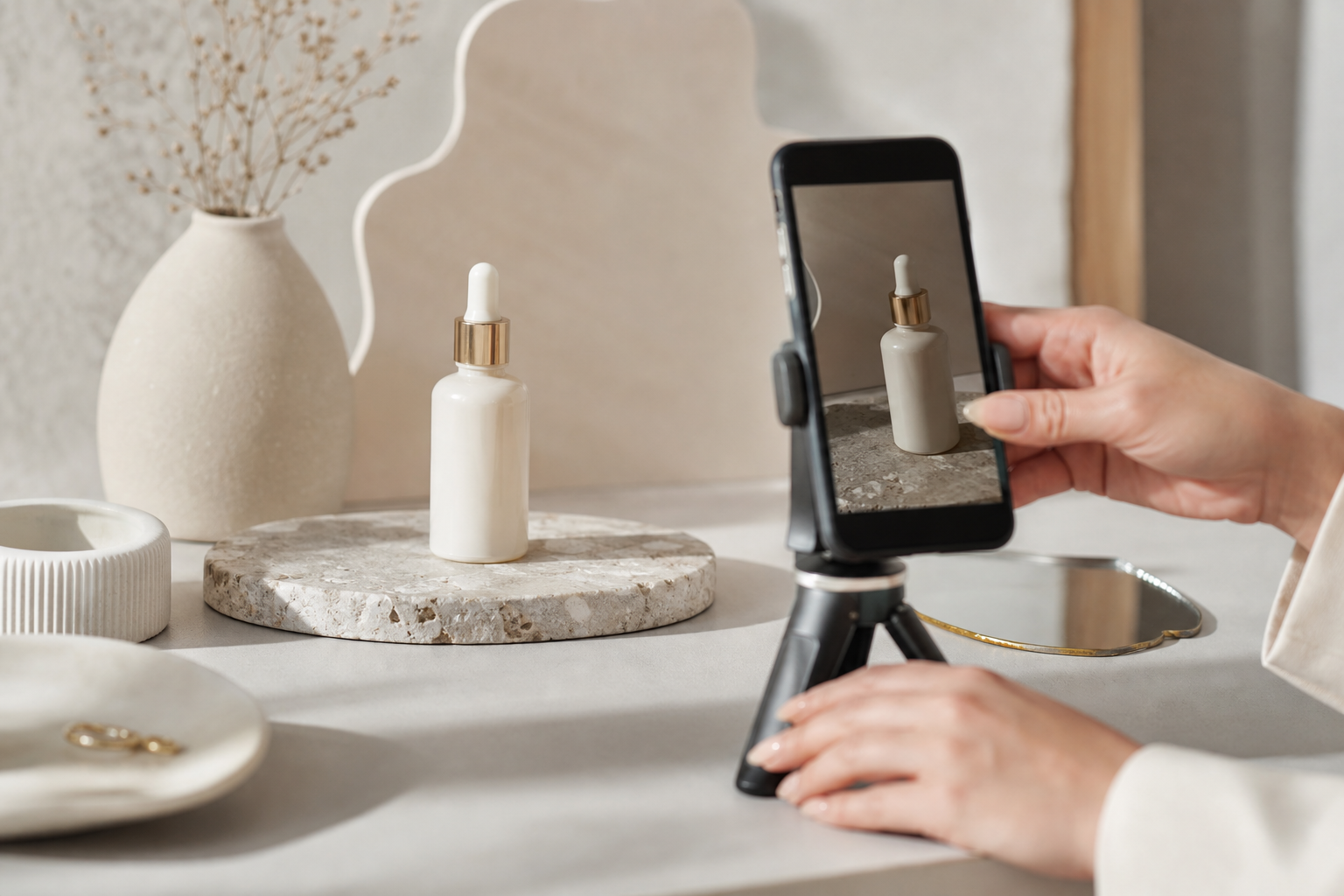
A faceless version just means the camera never lands on your face. Your hands unboxing the product. The serum dripping onto a spoon. The app opening on your phone. A voiceover walking the viewer through the problem and the fix. All of it sells. None of it requires you to be comfortable being seen.
People assume UGC means you have to be a bubbly girl talking to her front camera. That is one style. It is not the only one. Some of the highest-converting ads I have ever made were product-forward, not me-forward. When someone does not know you, you have to build trust for the product in the first three seconds anyway. A face does not do that. A good hook does.
If you are still fuzzy on the basics of the model, I broke it all down in this plain-English breakdown of what a UGC creator is. Read that, then come back here for the faceless part.
Which niches work best when you never show your face
Some niches are practically built for faceless content. If you are anxious about being on camera, start where the product carries the video.
Product-forward niches
Tech and gadgets. Beauty and skincare where the texture matters. Food and beverage. Home and cleaning. Pet products. Apps and software you can screen-record. Anything where the demo is the sell. In these categories the viewer wants to see the thing work, not your reaction to it.
My most lucrative deal ever was a tech brand at $10,500. Tech is one of the easiest categories to film faceless, because the whole point is showing the device doing what it promises. Hands, angles, close-ups, a confident voiceover. No face required.
Voiceover carries the trust
Here is what your voice does that your face does not have to. It names the problem. It sounds like a real person, not a script. It walks the viewer from doubt to want. When you cannot lean on your expression, your voiceover has to do more work, and honestly that makes you a better creator faster.
Record it clean. No echo, no background TV. Your phone plus a cheap lav mic on a quiet morning is enough. Do not overthink the gear before you have a single client.
Building a faceless UGC portfolio that gets you hired
No brand pays you off a promise. They pay you off proof. Before anyone sends you money, they want to see what you can actually make. That means a portfolio, and yes, you can build one without your face in a single frame.
Film three to five short videos, thirty to sixty seconds each, using everyday products you already own. Your favorite coffee. A skincare bottle from your bathroom. An app on your phone. You do not need past clients or fancy edits. You need clean, relatable footage that shows a problem and the product as the solution. That structure is what brands pay for.
Show variety across those samples. One demo-style video. One testimonial-driven voiceover. One before-and-after or transformation. When a brand watches your portfolio, they should instantly get your style, your framing, your editing, and the fact that you know how to sell without shouting.
Portfolio math
Three to five faceless samples are enough to start pitching.
You are not building a museum. You are building proof a brand can watch in two minutes and say yes to.
- Problem first – open on the pain the product solves
- Show the fix – hands and demo carry the middle
- Voiceover trust – your voice does what your face would
- Keep it short – thirty to sixty seconds each
The mistake I see constantly is people polishing their portfolio into oblivion instead of pitching. Get it good enough, then send it. If you want the full ground-up version, I mapped it out in how to become a UGC creator from absolute zero. Faceless creators follow the exact same path, just with different footage.
How to pitch and land brand deals faceless
This is where most people freeze. The DM you are scared to send. The pitch email you rewrite fourteen times and never hit send on. I have been there. Send it anyway.
Where to find brands paying for UGC
Four places I go back to again and again. Other creators’ portfolios, to see which brands are already paying for content. F You Pay Me, where you can see actual rates and deliverables other creators got. Instagram, where you tap the little person icon next to a brand’s follow button to surface similar brands in the same niche. And the TikTok Creative Center, where you can watch ads currently running and spot who is already investing in UGC.
You want brands that already run creator-style ads. Those brands understand the value. You are not educating them from scratch, you are showing up with a better version of what they already buy.
Pitch like a pro, not a beginner
Generic pitches get ignored. Do not open with «Hi, I’m a UGC creator, I’d love to work with you.» That is forgettable and it screams beginner. Instead, reference something specific. «I came across your recent campaign and I have a few content ideas that could drive more engagement.» Then show your samples.
Since you are faceless, say so plainly and frame it as a strength. You specialize in product-forward, high-converting content. No talent release needed, no personality risk, just clean footage that fits their brand. Some brands actually prefer this because the content ages better in their ad library.
Pitching is a numbers game before it is a skill game. If replies are dead, it is usually the pitch, not you. I broke down the exact fixes in why brands aren’t responding to your pitches, and the real send-to-deal ratio in the pitch math. Read both. They will save you weeks of guessing.
Pricing and closing your first faceless deal
Once a brand says yes, you sign a contract, they send you the product for free, you keep it, you film your video, you send it over, and they pay you. That is the flow. Nothing about it changes because you are faceless.
Do not undercharge because you are new or because you are «only» doing product shots. Faceless content is not lesser content. It is a specialty. When a brand asks your rate, quote it with a straight face and be ready to upsell. «Would you also want a vertical cut for stories at my quoted rate?» That one question raises your invoice.
My first deals felt tiny and thrilling at the same time. That first fifty-dollar yes feels like a million because it proves the whole thing is real. Then you climb. I walked the full ladder in UGC pricing ladders, and once you land one brand, you turn it into recurring income with the retainer system. Faceless creators can retain clients just like anyone else. A brand that likes your demo style will come back for more demos.
Free training
Learn the exact system to land your first paid UGC deal without showing your face.
I walk you through the portfolio, the pitch, and the first deal step by step, so you know exactly what to do in your first few days instead of guessing.
- Build your proof – the samples brands actually hire off of
- Send the pitch – the words that get replies
Affiliate link: if you sign up through it I may earn a commission, at no cost to you.
Do not build for other creators. Build for brands.
Here is the unpopular truth. A lot of faceless and faced UGC creators are making content that impresses other creators and gets ignored by brands. Pretty portfolios, group chats hyping each other up, «just manifest it» energy. That is not a strategy.
If you post «10 places to find brand deals,» you are talking to other creators, not to the brands who would pay you. The best thing I ever did was put my blinders on and stop watching what everyone else was doing. Build content that sells a product. That is the only content that lands a deal, faceless or not.
Learning how to become a UGC creator without your face on camera is a real, tested path. It is not a workaround or a consolation prize. Plenty of working creators never show their face and still bill thousands a month, because brands are buying the sell, not the selfie. If the camera scares you, that fear is allowed to exist and it is not allowed to stop you.
Film three samples this week. Pitch five brands next week. Keep your blinders on. The faceless UGC creator who ships beats the confident one who waits, every single time.
Frequently asked questions
Can you really make money as a faceless UGC creator?
Yes. Brands pay for content that sells their product, not for your face. Hands-on-product footage, demos, screen recordings, and voiceover all convert. Many working creators bill thousands a month without ever appearing on camera, especially in tech, beauty, food, and app niches where the product carries the video.
What niches work best for faceless UGC?
Product-forward categories. Tech and gadgets, skincare with visible texture, food and beverage, cleaning and home, pet products, and apps you can screen-record. In these niches the viewer wants to see the product work, so close-ups and voiceover do all the selling without a face on screen.
Do I need followers to be a faceless UGC creator?
No. UGC does not require an audience. You make content for brands to run on their own channels and ads. No posting on your page, no follower count needed. You just need a small portfolio of samples and a solid pitch. The model works the same whether you show your face or not.
How do I build a faceless portfolio with no clients?
Film three to five short videos using products you already own. Show a problem and the product as the fix. Use hands, demos, and voiceover instead of your face. Vary the styles, keep each clip thirty to sixty seconds, and start pitching once it is good enough. Do not wait for perfect.
Heads up: this article links to a free masterclass through an affiliate link. If you sign up through it I may earn a commission, at no cost to you. I only link things I actually use.