
Upwork UGC creator jobs are won by a specific formula: a profile that reads like a portfolio, a proposal that answers the exact brief, and enough volume to survive the rejection rate. You do not need followers or an audience. You need to be findable, respond fast, and prove you can deliver a clean video on time.
Most creators treat Upwork like a lottery. They send ten generic proposals, hear nothing, and decide the platform is dead. It is not dead. It is a numbers game with a filter on the front, and the filter is your profile. I have made over $154,000 as a UGC creator working platforms like this, and none of it came from luck. It came from treating each application as an input that produces a measurable output. This article covers how to set up your profile, how to price, how many proposals you actually need, and what separates the creators who get hired from the ones who quit.
Why Upwork works for UGC creator jobs
Brands post jobs on Upwork with a budget already attached. That is the whole advantage. On outreach, you are chasing someone who has not decided to spend money yet. On Upwork, the money is already allocated and the person is actively looking for a creator to hand it to.
UGC is converting as much as 10 times higher than traditional high-end ads, and brands have figured this out. They do not want a polished influencer spot. They want a person who looks like their customer holding the product and talking to a phone camera. That is the exact thing you can film in your kitchen. The demand is real and growing: more companies are hiring UGC creators for the first time than ever before, and that trend is not slowing down.
Upwork sits in the same category as Fiverr for me. It is a platform where brands come to you, which means you are reactive instead of hunting. You set up your presence once, then you respond to jobs the way you respond to a text message. The barrier to entry is low. You show up, you are professional, and you deliver on time. That is most of the job.
The tradeoff is competition. There are thousands of creators on these platforms. That volume scares people off, but it is not the actual problem. The problem is that most of those creators have a bad profile and send lazy proposals. You beat them by being easy to find and by over-delivering the moment someone hires you.
Setting up an Upwork profile that gets you hired
Your profile is the filter. A brand scanning ten applicants spends about eight seconds on each one before deciding who to shortlist. If your profile does not show a finished video in that window, you are out. This is the single highest-leverage thing you control, so build it before you send a single proposal.
Lead with work, not words
Upwork lets you upload portfolio pieces. Use every slot. Three to five sample UGC videos beat any paragraph you could write. If you have no client work yet, film spec pieces for products you already own. A brand cannot tell the difference between a paid deliverable and a self-made sample. They only see whether the video is good. If you are starting completely cold, my guide to landing your first paid deal with no experience walks through building that first set of samples.
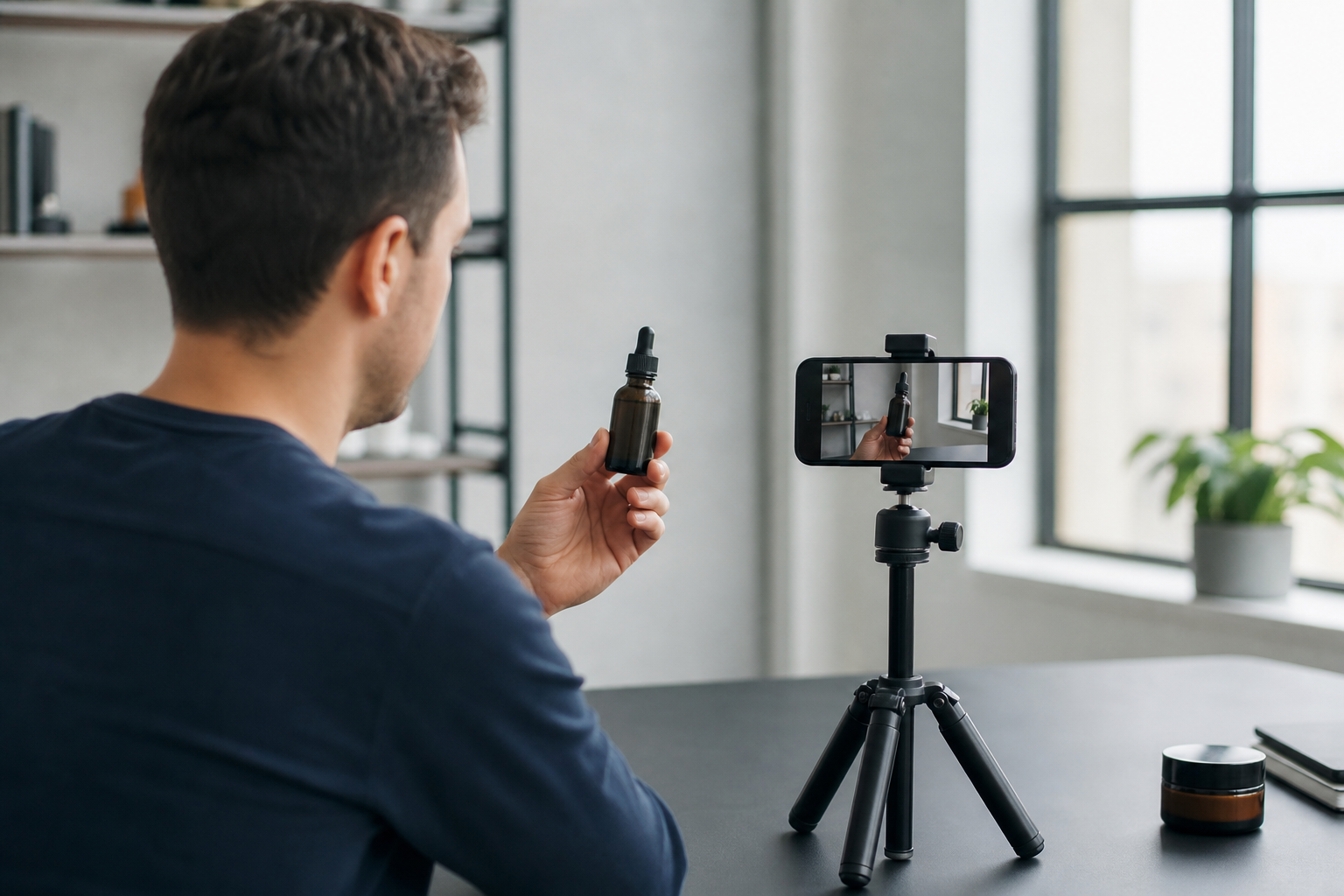
Your video should have a hook in the first two seconds, clear audio, and a natural person speaking. That is the whole bar. Do not over-produce it. Brands are hiring you because you look real, not because you own cinema gear.
Write the title and overview like search terms
Dan, a creator I know, cracked his first wave of clients by going granular with his keywords instead of competing in the crowded broad terms. The same logic applies on Upwork. Do not title yourself Video Creator. Title yourself UGC Creator for Beauty and Skincare Brands, or UGC Creator, Product Demos and Unboxings. Specific terms match specific job posts, and specific job posts have fewer applicants.
Your overview should state what you make, who you make it for, and your turnaround time. Two short paragraphs. No life story. Brands are scanning for fit and speed, not personality.
Turn on the boring settings
Set your profile to public. Fill your availability. Verify your identity so you can be paid. Add your skills tags with the exact keywords a brand would search. Upwork’s search ranks complete, verified profiles higher, and a half-finished profile signals you are not serious. The Upwork profile documentation spells out every field that affects your visibility.
How to win contracts: the proposal system
Here is the math nobody wants to hear. Ten proposals might get you one reply. One in five replies closes into a contract. That is fifty proposals per deal when you start. As your profile fills with reviews, that number drops fast, but early on you have to send volume and accept the rejection rate as a cost, not a verdict.
I keep a tracker for this. Every proposal gets a row: date sent, job type, budget, replied yes or no, closed yes or no. After thirty rows you can see your actual reply rate instead of guessing. If your reply rate is under five percent, your profile is the problem. If people reply but nobody hires you, your rates or your samples are the problem. The tracker tells you which one to fix. The full breakdown of these ratios lives in my article on the pitch math behind every UGC deal.
Answer the exact brief
A generic proposal is a wasted proposal. When a brand posts a job, they name the product, the format, and often the platform. Your first two lines should reference all three. If they want three TikTok unboxing videos for a supplement, your opening line names supplement, unboxing, and TikTok. This proves you read the post. Most applicants paste a template, so reading the post puts you ahead of half the field instantly.
Keep the proposal short. State that you understand the ask, link one sample that matches the format, give your price, and confirm your turnaround. Four sentences. Brands do not read essays, and a wall of text reads like desperation.
Bid on the right jobs
Do not chase every post. Filter for jobs with a verified payment method and a clear budget. Skip posts that ask for a full production for fifty dollars, and skip the ones with a hundred applicants already. Physical products get most of the attention, but smaller service businesses have exploded with UGC demand and those posts have far less competition. Pitch the niches everyone else ignores.
The proposal filter
A winning proposal proves you read the brief before you name a price.
References details – name the product, format and platform in line one;Links a match – attach one sample that mirrors the exact ask;Stays short – four sentences beat four paragraphs every time;Confirms delivery – state your turnaround so they trust the timeline
Pricing your Upwork UGC work
The fastest way to lose money on Upwork is to copy the rates of a seasoned creator when you are doing a quarter of the work. I hear new creators quoting five hundred dollars for a single raw clip because someone on Instagram said that is the rate. Brands push back, and they are right to. Your rate has to match the actual workload you are delivering: raw footage versus full production with editing, hooks, and revisions are two different jobs at two different prices.
I started at eighty dollars for my first video with zero experience. That was the right price for what I could deliver then. Within nine days I had my first inbound message. The low starting rate was not a mistake. It was the entry ticket that got me a review, and the review is what let me raise the price.
Build a rate ladder. A single video at your base rate, a two-to-three video package at a small discount, and add-ons for extra formats, extra revisions, or usage rights. Usage rights are where the money is: if a brand wants to run your video as a paid ad, that is a separate line item, not something you throw in for free. I break the full structure down in my piece on UGC pricing ladders from a hundred fifty to two thousand a video.
On Upwork specifically, know that the platform takes a service fee from your earnings. Price with that fee in mind so your take-home matches what you actually need. The Upwork service fee schedule shows the current percentage.
Turning one contract into repeat income
The single most profitable move on any platform is over-delivering on the first job. Alex landed a hundred-dollar gig for a product called Ball Buddy. Instead of phoning it in, he threw in creative hooks the brand never asked for. A year later that same brand tracked him down and made him the face of their entire YouTube channel. One hundred dollars became a retainer because he treated the job like an audition, not a transaction.
That is the whole strategy early on. Be easy to find in search, then over-deliver when they find you. Dan did the same thing by tossing a free extra read into every order, and the repeat bookings started showing up on their own. You do not need a huge client list. You need a handful of brands who book you again because the first video beat their expectations.
Repeat clients are the difference between grinding for new proposals every week and building a base that pays you on a schedule. Once a brand books you three or four times, propose a monthly arrangement: a set number of videos every month for a fixed fee. That converts one-off gigs into predictable income, and it takes you off the proposal treadmill. I lay out how to structure that in my article on turning one client into recurring revenue.
Ask for the review the moment you deliver. On Upwork, reviews are your ranking and your credibility. A profile with ten five-star reviews gets shortlisted before a profile with none, every time. Each review lowers your proposals-per-deal number, which means less work for the same result over time.
Free training
Learn the exact system I used to make over 154K as a UGC creator.
I break down the whole playbook in my Corporate to Creator UGC Masterclass: profile setup, proposals, and how to price so your first deal leads to the next one.
- First week – build a profile with three to five sample videos
- First deals – send volume, track every proposal, and over-deliver on job one
Affiliate link: if you sign up through it I may earn a commission, at no cost to you.
Doing this while working full time
You do not need to quit your job to win Upwork UGC creator jobs. I was working fifty hours a week in a corporate role and still producing fifteen to twenty UGC videos a week. It works because the reactive model fits around a schedule. You check new job posts once in the morning and once at night, send your proposals, and film on evenings and weekends.
The bottleneck is not time on camera. Most UGC videos take under an hour to film. The bottleneck is editing and file management. Storage fills up fast, so pay a few dollars a month for cloud storage instead of losing footage. Batch your filming: shoot three products in one session so you are not setting up your tripod every day.
Treat the whole thing as a system with inputs and outputs. Proposals in, contracts out. Track the ratio, fix the weak link, and repeat. You are not waiting to be discovered. You are running a small operation where the number that matters is how many deals close per month, and everything else is a lever on that number.
The bottom line on Upwork UGC creator jobs
Upwork UGC creator jobs come down to three inputs you fully control: a profile that shows finished work, proposals that answer the exact brief, and the volume to absorb the rejection rate while your reviews build. Start your rate low enough to land the first deal, over-deliver so the review is glowing, then raise your price as your proposals-per-deal number drops. Nobody hands you a career on this platform. You engineer it one tracked proposal at a time, and the creators who stick with the math get paid.
Frequently asked questions
Do I need followers to get UGC jobs on Upwork?
No. Upwork brands hire based on your portfolio and reviews, not your follower count. They want a real-looking person who can deliver a clean video on time. Upload three to five sample videos, keep your profile complete, and your audience size never enters the conversation.
How many proposals do I need to send to win a contract?
Early on, expect roughly fifty proposals per contract: ten proposals get about one reply, and one in five replies closes. That ratio improves fast as you collect reviews. Track every proposal in a simple sheet so you can see your real reply and close rates instead of guessing.
What should I charge for my first Upwork UGC job?
Start low enough to land the deal and earn a review. I started at eighty dollars per video with zero experience. Match your rate to the actual workload, raw footage costs less than full production with edits and hooks. Raise your price once you have reviews backing you up.
Is Upwork or Fiverr better for UGC creators?
Both work on the same principle: brands come to you and you respond. Upwork favors detailed proposals for posted jobs, Fiverr favors a searchable gig listing. Set up on both, track which sends more contracts for your niche, then double down on the one producing deals.
Heads up: this article links to a free masterclass through an affiliate link. If you sign up through it I may earn a commission, at no cost to you. I only link things I actually use.