
To set up a Fiverr UGC creator gig brands actually book, you need three things nailed: a sample video that shows real content skill, a gig title and description written for the brand instead of about yourself, and clear packages priced to match the deliverables. Fiverr sends you traffic. Your setup decides whether that traffic pays you.
Here is the thing nobody tells you about Fiverr as a UGC creator. It is not a magic money machine, and it is not a scam either. It is a marketplace where brands who already know they want UGC come looking for someone to make it. Your job is to be the creator they stop scrolling for. In this article I walk you through building the sample content, writing the gig, pricing your packages without underselling, and getting your first reviews so the algorithm starts working for you. This is one of the most beginner-friendly UGC creator jobs out there because the brands come to you.
Why Fiverr works for a UGC creator (and where it doesn’t)
Most beginners think landing UGC work means cold pitching a hundred brands and praying someone replies. That grind is real, and I still believe in it. But Fiverr flips the direction. The brand is already on the platform, wallet open, searching the exact words UGC creator. You do not have to convince them UGC exists. About 80% of US brands already use it in their marketing. Your only job is to convince them you are the one.
That is the magic of a Fiverr gig. It sells while you sleep. You are not sending ten pitches a day when a solid gig is quietly bringing brands to your inbox. I am not saying replace pitching with Fiverr. I am saying let them run at the same time.
Where Fiverr does not work: if you show up with no sample content, no clear packages, and a lazy title. The platform is crowded. A brand comparing twenty gigs in ten minutes will skip yours in two seconds if it looks like everyone else’s. Fiverr rewards the creator who packaged the offer like a pro, not the one who threw a gig up and hoped.
And no, Fiverr is not your boss. This is your business. Same as any freelance UGC work, you are contracted in to make content, you keep control, you set the terms. If you have ever wondered whether this whole thing is even legit, I broke that down honestly over in this piece on whether being a UGC creator is actually legit. Spoiler: it is.
Build the sample content before you touch the gig
You cannot sell content you have never made. Before any brand books you, they want to see what you can do. That does not mean you need past clients or experience. It means you need samples.
Record three to five short videos, thirty to sixty seconds each, showing yourself using everyday products you actually like. A coffee brand you drink. Your favorite wellness product. A tech gadget you already own. No fancy edits. No hard sell. Just authentic, relatable content that looks like the ads brands are already running.
These samples are your entire pitch on Fiverr. The video you attach to your gig is the first thing a brand watches, and often the only thing. If it looks like a real ad, they book. If it looks like a rushed selfie video, they scroll.
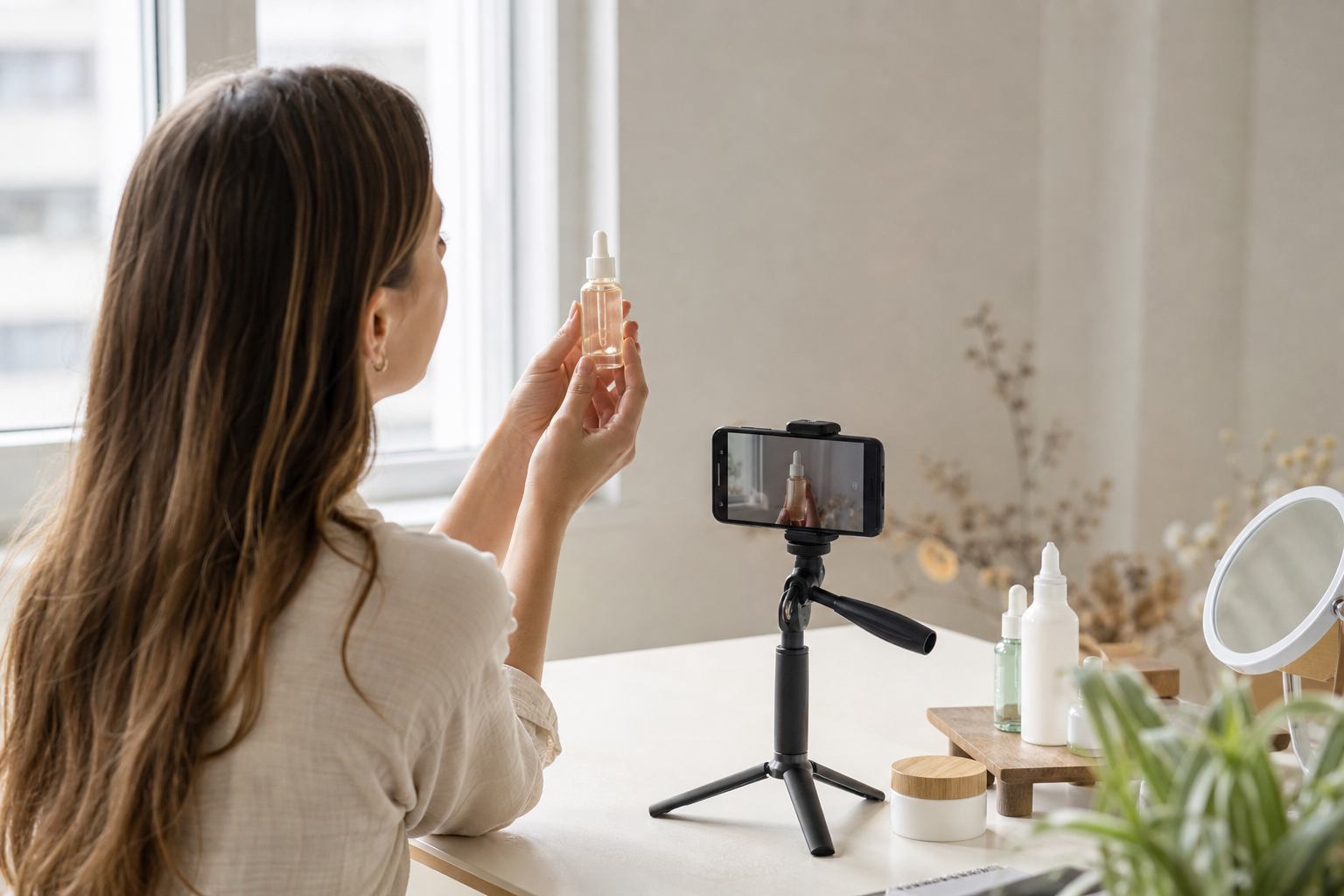
Want to know what kind of content brands are paying for right now? Go look at the TikTok Creative Center. It shows actual ads currently running on the platform, so you can see the exact format, hooks, and pacing brands want. Match that energy in your samples. You are not guessing what good UGC looks like. You are copying what is already converting.
Turn your samples into a mini portfolio
Fiverr lets you attach a gig video plus gallery images, but your best move is linking a full portfolio too. Drop your three to five videos into a clean Canva portfolio and keep the link ready. When a brand messages you before booking, you send that link and close the deal.
Camera confidence and editing style both live in that portfolio. If you are starting from zero and this whole idea feels impossible, I wrote a full walkthrough on how to start UGC with no experience and no followers. The portfolio is the foundation. Build it once, use it everywhere.
Sample first
Your gig video is the whole sale, so treat it like a real ad.
Record 3 to 5 clips of products you already own and love.
- Match the format of ads running in the TikTok Creative Center.
Write a Fiverr gig that speaks to the brand, not about you
Here is the mistake I see everywhere. Creators write gigs about how much they love making content and how passionate they are. Brands do not care. Your pitch, your gig, your everything should be brand focused, not about you.
Your gig title is your search terms. Write it the way a brand types it. Something like I will create authentic UGC video ads for your brand. Clean, specific, the exact words a brand searches. Not I am a creative passionate content girl. Nobody searches that.
In the description, lead with what the brand gets and the problem you solve. Product demos, problem-solution videos, high-converting formats. Tell them you understand marketing, because that is what separates a creator who gets booked from one who gets skipped. Show them you know what makes content convert, not just how to hold a phone.
This same principle is why some pitches get ignored completely. If your Fiverr messages or emails are getting silence, the fix is almost always the same brand-focused shift. I unpacked the whole thing in why brands aren’t responding to your pitches. Read it before you write a single word of your gig.
The details brands actually scan for
When a brand skims your gig, they are hunting for a few specifics. Give them fast. Turnaround time. Number of revisions. Whether you provide raw footage or edited video. Aspect ratios you shoot in. Usage rights included.
Be clear that this is UGC, not influencing. You are making content for the brand to run as their own ads, not posting to your followers. That distinction matters and a lot of brands still mix them up. If you want the clean explanation to borrow language from, I laid it out in UGC creator vs influencer. Your follower count is irrelevant here, and saying so upfront actually builds trust.
Price your packages so you don’t leave money on the table
Fiverr’s package structure, Basic, Standard, Premium, was practically built for UGC. Use all three. A single flat price signals amateur. Tiered packages signal a creator who knows her worth.
Across the industry, UGC brand deals land anywhere from $200 to $2,000 depending on deliverables and usage. Fiverr beginners tend to price lower to get those first reviews, and that is fine as a start, but do not stay there. Your Basic tier might be one edited video. Standard, three videos. Premium, five videos plus raw footage and extended usage rights.
The jump between tiers is not just quantity. It is value. A $150 video and a $500 video are not the same clip at a different price. The difference is the story and the selling built in. I broke down exactly what closes that gap in storytelling vs story-selling. Price the higher tier to reflect the higher skill.
If setting rates makes your stomach drop, you are not alone. Almost every creator underprices at first out of fear. Build yourself a real structure instead of guessing. My full guide on UGC pricing ladders from $150 to $2,000 a video gives you the exact ladder to climb. Set your Fiverr packages on that framework and adjust as reviews come in.
Add-ons that raise your order value
Fiverr gig extras are quiet money. Offer add-ons like extra revisions, faster turnaround, additional aspect ratios, hooks variations, and extended usage rights. A brand booking your Standard package will often click two add-ons without blinking. That is how a $300 order becomes a $450 order with zero extra pitching.
Usage rights are the big one. When a brand wants to run your video as a paid ad for six months, that is worth more than organic-only use. Charge for it. This is standard practice, and Fiverr’s add-on system makes it easy to itemize.
Get your first reviews and turn one gig into repeat work
The hardest part of any Fiverr gig is the first review. No reviews, no trust, no bookings. It is the same wall beginners hit landing their very first paid deal anywhere, which I covered in landing UGC creator jobs with no experience. You break through the same way: overdeliver on the first few orders even if the pay is low.
Take those early gigs seriously even at a beginner rate. Deliver early. Communicate clearly. Send a slightly better video than promised. That first five-star review with a happy brand comment is worth more than the money on that order. It unlocks every order after it.
Once a brand books you and loves the work, do not disappear. The ultimate goal is not hunting new brands every single month. It is consistent income from clients who come back. Ask to work with them again. Not just when you finish, but monthly or quarterly, because brands always have new campaigns coming up.
This is where real UGC income lives. Turning a one-time Fiverr order into a recurring relationship is the whole game, and it is how you stop chasing. I mapped out that exact process in the retainer system. Fiverr gets them in the door. Your work and your follow-up keep them.
Run Fiverr alongside the rest of your UGC business
Fiverr is one channel, not your whole business. The creators making real money treat it as one of several ways brands find them. They also post on social media daily, and that changes everything.
If you are a UGC creator and you are not posting your work publicly, you are leaving money on the table. Brands search for creators who get marketing, and the easiest way to prove it is to show them. Post your UGC examples. Product demos. Behind-the-scenes of your filming setup. Your social account becomes a living extension of your portfolio, and it drives inbound deals straight to you, Fiverr included.
You do not need to go viral. Consistency beats everything. If you want a repeatable system for what to actually post so brands hire you, I built one called the SEP Method and broke it down right here. Run that alongside your Fiverr gig and you are attacking from two directions.
Fiverr, cold pitching, social posting, and apps like Billo all feed the same goal: brands paying you to make content. These are all real UGC creator jobs channels, and the smart move is running two or three at once. When one is quiet, another is booking.
Free training
Learn the exact system I used to build a full-time UGC income from scratch.
I will walk you through the portfolio, the pitch, and the pricing that gets brands to say yes. In your first few days, record your sample videos and set up one gig using everything here.
- Portfolio buildout – the samples that make brands book
- Pitch and pricing – the scripts that bring in real money
Affiliate link: if you sign up through it I may earn a commission, at no cost to you.
Setting up a Fiverr gig is the easy part. Anyone can post one. The creators who get booked are the ones who did the work first: real samples, a brand-focused gig, honest pricing, and the discipline to overdeliver on early orders until the reviews stack up. Fiverr will send you brands. Whether they book you comes down to how seriously you took the setup. So take it seriously, bestie. Record those videos this week, write the gig that speaks to the brand, and let the platform start doing its job while you keep building everywhere else.
Frequently asked questions
Do I need experience to become a Fiverr UGC creator?
No. You need sample videos, not client history. Record three to five short clips of yourself using products you already like, no fancy edits, and attach your best one as your gig video. Brands book based on what they see you can do, not on a resume of past work.
How much should a beginner charge on Fiverr for UGC?
UGC deals across the industry run from $200 to $2,000 depending on deliverables and usage. Beginners often start lower to earn first reviews, which is fine short term. Use tiered packages, price your Premium tier to reflect higher skill, and raise rates as your reviews and portfolio grow.
Is Fiverr better than cold pitching brands for UGC?
They do different jobs, so run both. Fiverr brings brands who are already searching for UGC straight to you, while cold pitching lets you target brands you specifically want. The strongest creators use Fiverr, pitching, and daily social posting together so bookings never fully dry up.
How do I get my first booking on a new Fiverr gig?
Overdeliver on your earliest orders even at a lower rate to earn those first five-star reviews. Post your UGC examples on social media to drive traffic to your gig, keep a Canva portfolio ready for brands who message you, and reply fast. Reviews unlock everything after them.
Heads up: this article links to a free masterclass through an affiliate link. If you sign up through it I may earn a commission, at no cost to you. I only link things I actually use.