You land ugc creator jobs with no experience by building three to five short sample videos with products you already own, then pitching those samples directly to brands. Brands don’t check your resume. They watch your content, decide if it sells, and pay you to make more. That’s the whole gate. No following required.
Here’s the part nobody tells you when you’re stuck watching tutorials at 11pm, second-guessing every move. Brands do not care that you’ve never done this before. They care whether your video makes someone want the product. That’s it. When I started three years ago, I had zero clue what I was doing. No background in video marketing, no editing skills, no idea what brands wanted. I figured it out by treating UGC like a skill instead of a side hustle. This article walks you through the exact path: what a portfolio actually needs, how to pitch without sounding like everyone else, and how to price your very first deal so you don’t leave money on the table.
Why no experience isn’t the problem you think it is
The fear is loud. You feel it every time you open your camera app and put it back down. Who’s going to pay me? I’ve never done this. My videos look like a beginner made them.
Here’s the truth I wish someone had said to me back then. Brands are actively begging for this content. They need authentic, relatable videos for their marketing and their social ads, and they can’t produce that at scale in-house. They work with UGC creators because we understand how content actually sells, not because we have a following. So the barrier isn’t your experience. The barrier is that no one ever explained the path clearly, and you got stuck in the research phase.
I made $15K months creating content for brands with none of the credentials you think you need. The reason it worked is simple: results come from strategy, not from a fancy resume. Once you accept that, the whole thing stops feeling impossible. If you’re still fuzzy on what the job even is, I broke it down in this plain-English explainer.
The one skill that actually matters
Most beginners obsess over aesthetics and trends. Brands don’t care about that. They care about content that highlights a problem and shows the product as the solution. Learn to do that one thing and you’ll out-earn creators with ten times your followers.
Build a portfolio before anyone pays you
Before any brand hands you money, they want to see what you can do. That does not mean past clients. It does not mean testimonials from other brands. It means samples you create yourself, out of thin air, using stuff already in your house.
Here’s the assignment. Record three to five videos, each 30 to 60 seconds, showing yourself using everyday products you genuinely like. A coffee brand. Your favorite wellness product. The tech thing you can’t shut up about. No fancy edits. No hard sell. Just authentic, relatable content that shows a brand exactly the kind of work you’d make for them.

Give yourself variety. Film one testimonial-style video where you talk to the camera like you’re recommending it to a friend. Film one product demo where you show it working. Film one before-and-after if the product allows it. That range is what tells a brand you can handle whatever their campaign needs.
Don’t spend two weeks on this. I’ve watched too many creators die in the research phase, saving UGC videos they like and never filming their own. Give research one day, max. Then start making examples. The full no-experience starter walkthrough lays out the day-by-day version if you want the structure.
Portfolio truth
Your first portfolio is built entirely from products you already own.
You don’t buy anything, wait for a brand, or borrow credibility. You film what’s on your shelf and let the work speak.
- Three to five clips – 30 to 60 seconds each
- Show the problem – then the product solving it
- Skip the edits – authentic beats polished every time
Set up your creator presence so brands can find you
You need a home for this work. Create an email, a TikTok, and one more social profile dedicated only to UGC. Not your personal account with the vacation photos. A clean space where your samples live and where you document the journey.
Post your example videos there. Talk about why you decided to become a UGC creator. Share what you’re learning. This does two things: it gives you a link to send brands, and it lets brands who are hunting for creators stumble onto you. That second part is how inbound deals start showing up later, and no, you don’t need to go viral for it. Consistency beats everything.
Keep the entry cost low
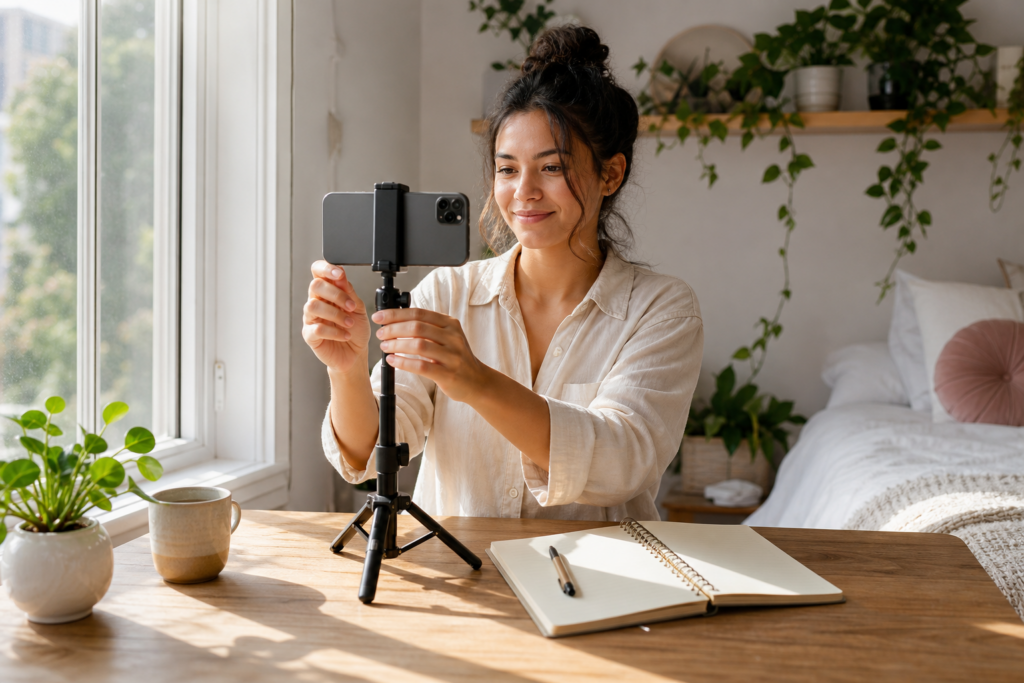
One of the reasons I’m obsessed with UGC is how cheap it is to start. You don’t need professional equipment. Your phone, natural light, and a cheap tripod are enough for your first paid deal. The ring light can stay in the box a little longer. Don’t let gear become another excuse to delay.
How to pitch and land ugc creator jobs with no experience
This is where it gets real. UGC is not passive income. You have to pitch brands, land the deals, and make the videos. But it’s far more lucrative and far faster than picking up a part-time shift somewhere, and the pitch itself is a repeatable skill you’ll get better at every week.
Most beginners struggle because they send the same forgettable message everyone else sends. Here’s exactly what not to write:
Hi! I’m a UGC creator. I’d love to work with you!
That gets ignored because it makes the brand do the thinking. Instead, reference something specific and bring an idea to the table. Something like: I came across your recent campaign and I have a few content ideas that could really drive engagement. You’re showing up as a strategist, not a stranger asking for a favor.
Attach or link your samples. Keep it short. Then send more of them than feels comfortable, because pitching is a numbers game before it’s a skill game. I broke down the actual math of how many emails equal one deal in this piece on pitch volume, and if your messages are getting silence, here’s the exact fix for pitches that aren’t landing.
Where to find brands to pitch
Study high-performing ads first so you understand what these brands already pay for. Then look at the products in your portfolio, smaller and mid-size brands in wellness, beauty, food, and tech, and the companies whose ads keep showing up in your feed. Those are companies actively spending money on exactly this kind of content.

Pricing your first deal without underselling yourself
Your first paid deal might be small. That’s fine. When I started, that first fifty-dollar yes felt like a million dollars, and it should, because it’s proof the whole thing works.
But don’t get stuck there. Most creators park themselves at $150 a video and never move, not because they aren’t good enough, but because they don’t know how to position their value. The jump from a $150 video to a $500 video usually comes down to whether you’re telling a story or actually selling the product. I unpack that exact gap in storytelling versus story-selling.
Brands will happily pay $1,000 or more for a creator who delivers strategy instead of just aesthetics. You get there by raising your rate with confidence on the next deal, and the next. When you’re ready to map that climb, this pricing ladder breakdown shows the steps from $150 to $2,000. And once a brand loves your work, don’t chase a brand-new client every time, turn that one client into recurring income with a simple retainer setup.
Free masterclass
Learn the full path to your first paid UGC deal in one free session.
I walk through what UGC actually is, why right now is the time to start, and how to land paid brand deals without a following. Come with a product in mind and a phone that films.
- Build your first samples – in the first few days
- Pitch with a specific idea – not a generic hello
Affiliate link: if you sign up through it I may earn a commission, at no cost to you.
Landing ugc creator jobs with no experience isn’t about being lucky or already talented. It’s about following a tested path in order: film your samples, set up your presence, pitch with a real idea, then keep raising your rate as you deliver. I started as the girl binge-watching tutorials and second-guessing every pitch. The only thing that changed was that I stopped researching and started sending. Your first fifty-dollar yes is closer than the fear is telling you. Go film the first video today.
Frequently asked questions
Do I really need zero experience to get UGC creator jobs?
Yes, genuinely. Brands don’t check for a resume or past clients. They watch your sample videos and decide if your content sells their product. I landed deals with no background in video marketing and no editing skills. Build three to five samples and you have everything a brand needs to say yes.
How long does it take to land the first paid deal?
You can realistically land your first deal within about seven days if you move. One day of research, then build your example videos, set up a dedicated profile, and start pitching. The slowest part is usually fear, not the work. Pitching is a numbers game, so send more than feels comfortable.
What equipment do I need to start with no experience?
A smartphone, natural light, and a cheap tripod. That’s it for your first deal. The entry cost for UGC is low on purpose. Professional cameras and ring lights can come later once you’re earning. Don’t let gear shopping become the excuse that keeps you from filming.
How much should I charge for my very first UGC video?
Your first deal might land around fifty dollars, and taking it is completely fine as proof the process works. Don’t camp there, though. As you deliver strong, selling-focused content, raise your rate on each new deal. Creators regularly move from $150 videos to $1,000-plus projects by positioning value, not by adding followers.
Heads up: this article links to a free masterclass through an affiliate link. If you sign up through it I may earn a commission, at no cost to you. I only link things I actually use.