
Billo is a marketplace app that connects brands with UGC creators for short-form product videos, and it works on a claim-and-shoot model: brands post jobs, you apply or get matched, they ship the product, you film and deliver to a brief. Pay runs roughly $60 to $150 per video for most jobs, which is entry-level rate territory compared to direct brand outreach.
I have watched a lot of students run Billo as their first platform. Some land steady work on it. Some burn a week applying and get nothing. The difference is not luck, it is whether you understand what the platform actually is: a low-barrier funnel with a low-pay ceiling. This review covers how the app works step by step, what the numbers really look like, where it fits for a new billo ugc creator, and when you should graduate off it. No hype. Just the mechanics.
How the Billo UGC creator app actually works
Billo runs on a simple loop. A brand posts a project with a brief and a product. Creators apply or get matched. The brand ships the product to your door. You film to the brief, upload the raw or edited clips, the brand reviews, and you get paid once it clears.
The whole point of the model is that you do not chase anyone. The demand comes to the platform, and you react to it. That is the same reason I built my early income on Fiverr instead of cold pitching. When brands come to you, your job shrinks to two things: apply cleanly and deliver on time. For a beginner with no portfolio and no pitch skills, that removes the hardest part of the business.
The tradeoff is that you are one profile in a stack of applicants. You do not set the price. The brand does, and the platform takes its cut. You are not negotiating a rate ladder, you are accepting a posted number. That is fine when you are learning the reps. It is a problem when you think that number is what UGC pays.
The application and matching step
You build a profile with sample clips, then apply to open jobs or wait to be invited. The brands filter on your demographic, your niche, and the quality of the samples on your profile. If your profile has three decent phone-shot videos that look like real ads, you get picked more. If it is empty, you get skipped.
This is where most people stall. They sign up, apply to twenty jobs with a bare profile, and hear nothing. That is not the platform failing you. That is the same math as cold pitching: without proof, the yes rate collapses. Load your profile before you apply to anything.
The shoot and delivery step
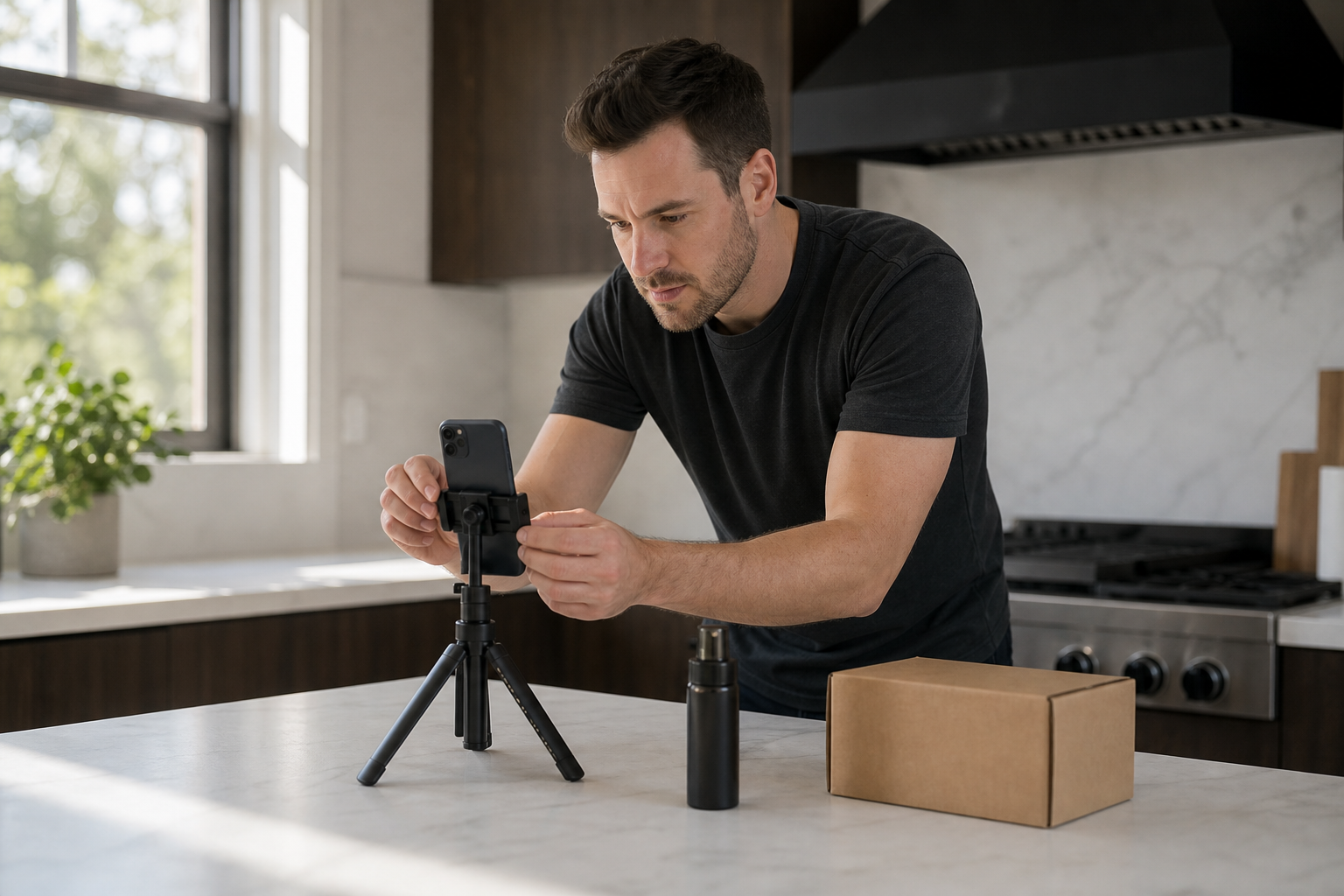
Once a brand picks you, they ship the product. You get a brief with the hook, the talking points, the shots they want, and the format. You film on your phone, edit to spec if the job requires it, and upload. The brand can request revisions before they approve.
Delivery discipline is the whole game here. Show up, be professional, hit the deadline. That reputation is what turns a one-off job into repeat invites on the platform. Miss deadlines and your account rating drops, and the invites stop coming.
What a Billo UGC creator actually gets paid
Here is the number that reframes the platform. Most Billo jobs pay in the $60 to $150 range per video, and the platform sets that number before you ever apply. You are not walking into a negotiation. You are accepting a posted rate.
Compare that to what UGC actually commands off-platform. I have students charging $300, $500, and more for a single video working directly with brands. On Fiverr I started at $80 with zero experience and climbed from there. The ceiling on a marketplace like Billo is structurally low because the platform is competing on price to fill jobs fast. That is the deal you are signing up for.
I will be honest about my take. I am not a huge fan of Billo, and I say the same about JoinBrands, because they tend to start creators way lower on pay than platforms like Influee or UGC.io. But I have a lot of students who have had real success on it, so I am not telling you to skip it. I am telling you to know what it is.
Why the pay is what it is
The rate is not an accident. On a marketplace, you provide raw footage or a lightly edited clip to a brief someone else wrote. You are not doing the strategy, the scripting from scratch, or the negotiation. The workload is a fraction of a full production, and the pay reflects the fraction.
The mistake I see constantly is new creators copying the rates and boundaries of people who have been in the game for years, without the results or leverage to back it up. Coming from the brand side, brands push back hard on that. On Billo you never hit that wall because the platform prices the job for you. Off Billo, your rate has to match the value you actually bring.
The real math
Billo pays like a training platform, not a career
Ten $80 jobs on Billo is $800 of income and ten shoots of practice. Two direct-brand videos at $400 is the same money for one fifth of the reps. Both have a place, but only one scales.
- Marketplace rate – fixed by the platform, no negotiation
- Direct rate – set by you, climbs with proof
- The play – use one to fund the reps that build the other
Where Billo fits in a real UGC business
Treat Billo as a rep machine, not an income strategy. The value of the first ten jobs is not the $800 you make. It is the ten finished videos you can screenshot into a portfolio, the ten briefs you learned to read, and the ten deadlines you hit clean.
That portfolio is the asset. Once you have real work to show, you stop being a beginner competing on price and start being a creator with proof. Proof is the thing that lets you charge $400 instead of $80. The platform funds the reps that make you fundable elsewhere.
I run UGC as a business, which means every input gets measured against the output it produces. Billo produces reps and small cash. It does not produce leverage, retainers, or rate growth. So I use it, or tell students to use it, for exactly what it is good at and nothing more. If you are still deciding whether this whole thing is even real, read my honest take on whether being a UGC creator is legit before you sign up for anything.
Billo vs the other marketplaces
Billo is one of several claim-and-shoot platforms. JoinBrands works the same way, and I broke that one down in detail in my JoinBrands review. Influee and UGC.io tend to start creators at higher pay. The mechanics are nearly identical across all of them: profile, apply, ship, shoot, deliver.
My advice is to pick one or two and go deep instead of spreading thin across five. A full profile and a strong rating on one platform beats a half-built presence on all of them. The ugc creator jobs on these apps go to the profiles that look ready, not the ones that applied first.
How to actually win jobs as a Billo UGC creator
The single biggest lever on any of these platforms is your profile samples. Brands are scanning for people who look like their customer and can shoot a clip that does not look like an ad. Three strong sample videos will out-earn a hundred applications with a blank profile.
If you do not have client work yet, make spec videos for products you already own. Film them like real UGC ads, hook first, product in use, a reason to click. That is the point of my guide to starting UGC with no experience: you build the proof before anyone pays you for it, and then the paid work comes faster.
Once you are getting picked, protect your rating like it is your paycheck, because it is. Deadlines and clean deliverables drive repeat invites, and repeat invites are the only way a fixed-rate platform starts to compound for you. A brand that liked your first video will pick you again without you applying.
Know when to leave
The exit signal is simple. When you have ten to fifteen finished videos and a delivery record you are proud of, you are done using Billo as a starter. That is the moment to build direct relationships, raise your rate, and turn single jobs into recurring income.
The real money in UGC is not per-video marketplace work. It is retainers, the same client paying you every month for a batch of content. I laid out exactly how to convert one deal into recurring pay in my retainer system breakdown. Billo can not give you that. Direct relationships can.
Start here
Learn the exact system I used to go from corporate to full-time creator
In the free masterclass I walk through setting up your profile, landing the first deal, and building past marketplace rates into real income. First few days: build three spec videos and load a platform profile.
- First deal – the exact steps to your first paid video
- Rate growth – how to price past $80 and never look back
Affiliate link: if you sign up through it I may earn a commission, at no cost to you.
The honest verdict on Billo
Billo does one thing well: it lowers the barrier to your first paid UGC job to almost nothing. No pitching, no cold email, no negotiation. You apply, they ship, you shoot, you get paid. For someone who has never done this, that is worth a lot.
What it does not do is pay you what UGC is worth. The $60 to $150 ceiling is fixed, and it stays fixed no matter how good you get. That is why I treat it as a training ground and not a destination. Every serious creator I know used a low-barrier platform to get reps, then walked away from the fixed rate the second they had proof to charge more.
Use Billo to become a working creator. Then stop letting a marketplace price your work. The number you accept there is not the number you are worth.
Frequently asked questions
How much do Billo creators make per video?
Most Billo jobs pay $60 to $150 per video, set by the brand and the platform before you apply. Higher-budget projects exist but are less common. You do not negotiate the rate. Direct brand work off the platform routinely pays $300 to $500 or more for the same effort.
Do you need followers to be a Billo UGC creator?
No. Billo pays for content, not reach, so your follower count does not matter. What matters is a profile with strong sample videos, a demographic brands want, and a clean delivery record. You can start with zero audience and get picked on the quality of your samples alone.
Is Billo better than JoinBrands or Influee?
The mechanics are nearly identical across all three. Billo and JoinBrands tend to start creators at lower pay, while Influee often posts higher rates. Pick one or two, build a full profile, and go deep rather than spreading thin. Your rating on one platform beats a weak presence on five.
Should I use Billo as a beginner?
Yes, as a training ground. It removes pitching and negotiation, so you get real reps and finished videos for your portfolio fast. Use it for the first ten to fifteen jobs, then move to direct brand work and retainers where the pay ceiling is far higher.
Heads up: this article links to a free masterclass through an affiliate link. If you sign up through it I may earn a commission, at no cost to you. I only link things I actually use.