
Authority hacking is a copywriting move where you borrow credibility the product has not earned yet and hand it to the viewer inside the first line of the script. You reference a source the viewer already trusts, a dermatologist, a stat, a comparison, then let that trust transfer to the product. Done right, it lifts the conversion rate of a UGC ad without changing the product at all.
The first paid video I ever made got me $80. It was under a minute, filmed ten minutes from my house. Today I make over $20,000 a month doing the same thing, and the single biggest lever between those two numbers is not lighting or editing. It is the words in the first three seconds. Most creators write hooks that describe the product. Authority hacking writes hooks that borrow trust. This article breaks down the mechanic, why it works on paid traffic, and how a ugc ads creator installs it into a script without sounding fake.
What authority hacking actually is
Cold traffic does not trust your product. It has never heard of it. The ad interrupted a scroll, and the viewer’s default state is suspicion. Every second of the video is spent either building trust or losing it.
Authority hacking short-circuits the trust curve. Instead of asking the viewer to believe the product on its own merit, you attach the claim to something they already believe. A doctor. A study. A named comparison. A number. The viewer’s existing trust in that anchor bleeds onto the product in the same sentence.
Here is the difference in one line. Weak hook: this serum cleared my skin. Authority-hacked hook: my dermatologist told me most drugstore serums are missing the one ingredient that actually matters. Same product, same skin. The second version borrows a white coat the brand never paid for.
This is copywriting, not lying. You are not inventing a dermatologist. You are framing a real claim through a source the viewer respects. When brands say no to UGC, the data eventually forces them to yes because it does not lie: UGC ads run 4x on click-through rates and 3x on return on ad spend against polished commercials. Authority hacking is one of the reasons that gap exists. Real people citing real authority reads as honest. A studio actor citing the same thing reads as a script.
Why it converts better than a straight product pitch
A product pitch asks for trust up front. The viewer has to decide, in a second and a half, whether to believe a stranger about something they are trying to sell. Most decide no.
Authority hacking moves the trust decision off the product and onto the anchor, which the viewer has already decided about. They trust their doctor. They trust a number. They trust a side-by-side comparison they can see with their own eyes. You are not asking them to trust something new. You are pointing an old trust at a new object.
There are four anchors that carry weight on cold traffic. Expert authority: a dermatologist, a mechanic, a nutritionist. Statistical authority: a specific number, not a round one. Comparison authority: this product against the one they already know. Social authority: everyone in my group chat switched to this. Each one hands the viewer a reason to stay past the three-second mark, which is the only window that matters on paid placement.
The mistake beginners make is loading the whole script with authority and forgetting the product ever has to appear. Authority opens the door. The product still has to walk through it. You borrow the credibility, then you deliver on it, or the ad tanks and the brand does not rebook.
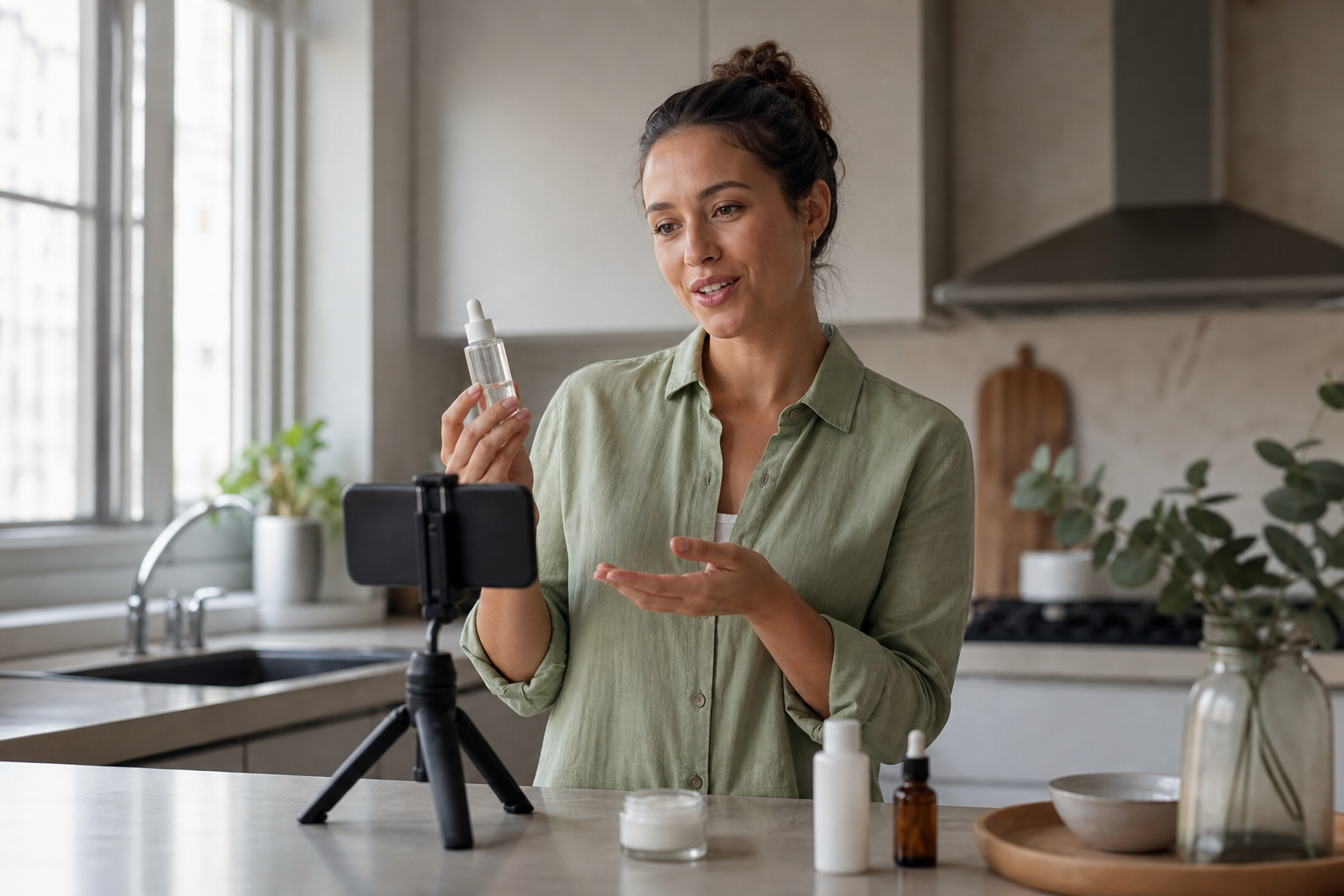
How a ugc ads creator writes an authority hook
Every authority hook has the same skeleton. Trusted source, then a claim that reframes the category, then a turn toward the product. Three beats, spoken in the first five seconds, before the viewer has decided to scroll.
Start with the source. My dentist said. According to a study out of. I compared this to the brand everyone buys. The source is the first thing out of your mouth because it is the thing that stops the scroll. Do not build up to it. Lead with it.
Then reframe the category, not the product. My dentist said most whitening strips actually damage enamel. Notice you have not mentioned the product yet. You have made the viewer distrust everything they currently use. That gap is where your product lands. A ugc ads creator who understands this writes the tension before the pitch, every time.
Then turn. So when I found one that a dentist would actually recommend, I switched. Now the product enters, already framed as the exception to a problem you just planted. The claim was never that your product is good. The claim was that everything else is flawed and this is the fix.
Hook skeleton
Every authority hook is three beats in five seconds.
Write these in order and the hook builds its own tension before the product ever appears.
- Trusted source – lead with it, do not build up
- Category reframe – make them distrust what they already use
- The turn – product enters as the exception, not the pitch
Match the authority to your real face
The anchor has to fit the person on camera. I am bald with a beard, so I lean into it. I have done more head shavers and beard products than I can count because I owned exactly what I look like. If you are a 45-year-old mom, say that. Brands want the demographic, and the authority reads as real when the face matches the claim.
A 22-year-old citing forty years of experience breaks the spell. A 60-year-old citing it lands. Authority hacking works because the viewer believes the person, and the person has to be plausible as the one making the claim. Setting yourself apart is not a branding exercise. It is what makes the borrowed credibility stick.
The scripts that get it wrong
The fastest way to kill an authority hook is a fake number. Round, unsourced stats read as invented because they are. 90% of people saw results. Nobody believes that line, and it drags the rest of the script down with it.
Specific beats round. If the brand gave you a real figure, use the exact one. If they did not, do not manufacture one. Switch to a different anchor. Comparison authority needs no stat at all. You hold the product next to the one everyone knows and let the viewer’s eyes do the work. That is authority they can verify in the frame.
The second failure is authority with no payoff. You open with a dermatologist and never show why the product earns the recommendation. The viewer clocks the bait. You borrowed trust and never repaid it, and the ad’s watch time collapses at the exact second the product should have delivered.
The third is stacking too many anchors. A doctor and a stat and a comparison and a testimonial in twenty seconds reads as a used-car pitch. Pick one anchor. Build the whole hook on it. One strong borrowed trust beats three weak ones fighting for the same five seconds.
Over-deliver and the authority carries into rebooks
When you nail an authority hook, give the brand two more versions of it for free. Different sources, same product. You are already standing there with your phone, so shoot two more takes. This is how repeat clients happen, and repeat clients are the money. Half of my brand deals come from brands coming back because I handed them more than they asked for.
A creator who delivers three working authority hooks instead of one becomes the person the brand calls first. The hook mechanic wins the deal. Over-delivering on it turns one deal into a recurring stream you do not have to pitch for again.
Where authority hacking sits in the bigger skill stack
Authority hacking is a hook mechanic, and the hook is one lever among several that separate a $150 video from a $500 one. The others are structure, pacing, and the difference between telling a story and selling through one. A great hook on a flat script still underperforms.
The skill is learnable from zero. I started with no experience and no followers, and worked with over 250 companies inside ten months. You do not post these videos to your own accounts. The brand sends the product and often the script, you make the video, you send it back, they run it as an ad, you get paid a flat rate. Learning to rewrite their weak hooks into authority hooks is what lets you charge above the flat rate they offered.
If you are still figuring out the front end, the pitch and the portfolio, that comes first. You need one video and a way to get in front of brands before a hook trick matters. But the moment you are landing deals, the authority hook is the highest-leverage line you can learn to write. It is a specific, repeatable input that moves the output every brand actually tracks: the conversion rate on the ad they paid you to make.
The math on that is simple. A brand runs your video against three others. Yours holds attention past three seconds and converts. They rebook you and cut the other creators. That is what a working ugc ads creator is selling, not footage, but ads that convert, and the authority hook is a big part of why yours does.
Free masterclass
Learn the exact system I used to go from an $80 video to over $20,000 a month.
You get the front-end mechanics: how to build a one-video portfolio, pitch cold brands, and write hooks that actually convert on paid traffic.
- First days – set up one sample video and a simple pitch list
- First week – send your first batch and log every reply in a tracker
Affiliate link: if you sign up through it I may earn a commission, at no cost to you.
Data on UGC ad performance is public if you want to bring it into your own pitches. Meta publishes creative best-practice guidance for advertisers, and platform ad libraries let you study the hooks brands are actually running. Read Meta’s advertiser resources and browse the public ad library to see authority hacking live in the wild.
The last thing worth saying
Authority hacking is not a growth hack you turn on and off. It is a way of writing that assumes the viewer does not trust you and gives them a reason to, in the only window you get. Borrow the trust, then earn it in the same breath. The creators who understand this stop describing products and start reframing categories, and their videos convert while everyone else’s get scrolled past. Learn the three-beat skeleton, match the authority to your real face, and become the ugc ads creator the brand calls back.
Frequently asked questions
Is authority hacking the same as lying in an ad?
No. Lying invents claims. Authority hacking frames a real claim through a source the viewer already trusts. You reference an expert, a real stat, or a visible comparison. If the brand did not give you a number, you do not invent one, you switch to an anchor you can actually back up on camera.
Do I need real credentials to use authority hacking?
No. You are not claiming to be the expert. You are citing one: my dermatologist said, according to a study, compared to the brand everyone uses. The authority belongs to the source you reference. Your job is to make it plausible by matching the claim to who you actually are on camera.
Which authority anchor works best for cold traffic?
Comparison authority is the safest because the viewer verifies it in the frame with their own eyes, no stat required. Expert authority hits hardest when your face fits the claim. Statistical authority works only with a specific, real number. Avoid stacking more than one anchor in a single hook.
Will brands let me rewrite the hook they scripted?
Most will if you over-deliver. Shoot their scripted version, then hand them two extra takes with authority hooks for free. You are already there with your phone. Brands rebook the creators who bring better hooks, and that is how one deal turns into a repeat client.
Heads up: this article links to a free masterclass through an affiliate link. If you sign up through it I may earn a commission, at no cost to you. I only link things I actually use.