Brands hire you when your face is everywhere, your niche is obvious, and your content is good enough to trust. That is the SEP method: Show up, Establish a niche, Prove you can create. Post consistently, make your life stage and specialty impossible to miss, and let the work do the pitching. Follower count does not matter. Volume and clarity do.
Most people get into UGC because they were told they do not have to post on their own social media. That is true if you only pitch. But the creators pulling inbound deals are not lucky. Their face is just everywhere. If you started posting three years ago and stayed consistent, you would close more deals than someone at the same cadence who started last year, because you have more content floating around the platforms than they do. This article breaks down exactly what to post as a ugc creator for beginners so brands come to you.
Why posting matters even for a ugc creator for beginners
Sales is a numbers game. Pitching is one lever. Posting is the other. When you pitch, you reach one brand at a time. When you post, you sit in front of every brand scrolling that platform, on repeat, for free. One of those channels you control by sending emails. The other works while you sleep.
I ran the pitch math before. Ten pitches, one reply, one in five replies closes: that is fifty pitches per deal. Posting does not replace that. It stacks on top. A brand that saw your content three times before your email opens that email differently than a brand that never heard of you. The post warms the pitch.
The excuse I hear most is that you need better gear first. You do not. Authentic is what is winning with UGC right now. You do not need the newest phone or the nicest ring light. You need to start posting today. The gear excuse is just a delay dressed up as a reason.
The second excuse is the corporate job. I did UGC for months before anyone at my company found out, and when they did, my boss said that is cool. Everybody has a side hustle at every level. Your company does not own your off hours. If fear of being seen is stopping you from posting, that fear is costing you deals.
S is for show up: consistency compounds
Consistency compounds. That is the whole engine. Every post you publish stays on the platform. Post for a year and you have a library of proof working for you the entire time. The creator with two years of consistent content beats the creator with two months, even at the same posting speed, because the volume is not equal. More content in the world means more chances a brand stumbles onto you.
At the start you want to post so much that other people get sick of seeing you. That sounds aggressive. It is supposed to. To get booked you need to be seen, and being seen at a level that actually moves the number feels like too much when you begin. The brands are drowning. Some of them are putting out 5,000 pieces of content a month just to stay competitive on TikTok and paid ads. They are hungry for people who make content. Your job is to be visible when they go looking.
Show up means a real cadence you can hold. Not a burst for two weeks and then silence. Pick a number of posts per week you can sustain for six months and hit it. The specific number matters less than the fact that you never stop.
If you are still building the muscle, the mechanics of posting from nothing are the same ones I cover in starting UGC with no experience and no followers. You do not need an audience to post. You need a habit.
E is for establish a niche: make brands able to find you
The more niche you are, the easier brands can pick you. Say you do everything and no one can slot you into a campaign. Say you do vegan makeup, or tech, or wellness, and a brand in that lane sees you and thinks, I want to work with this person. Specificity is not a limit. It is a filter that pulls the right brands toward you.
Be clear about where you are in your life, too. Brands have told me they wish they knew when creators were getting engaged, because wedding and bachelorette brands are hunting for people in that stage. If you just got engaged and you are getting married in May, put it on your about page. Now those brands can find you. Location works the same way. The more a brand knows about you, the more they can leverage.
This is where a lot of beginners freeze. They think establishing a niche means locking themselves in forever. It does not. Pick the thing you are genuinely in right now and lead with it. You can widen later. The point is that a stranger scrolling your profile understands in three seconds who you are and what you are for.
Niche clarity
A brand should know what you are for within three seconds of landing on your profile.
Being specific beats being available, and it does the sorting for you.
- Pick one lane – vegan makeup, tech, wellness, local
- State your life stage – engaged, new parent, just moved
- Add your location – local UGC is on the rise
- Update your handles – one account, easy to find
P is for prove you can create: post content brands want to buy
Here is the part that surprises people. The content that gets you hired is not always UGC content. A creator I know got picked by brands off her personal posts, wellness and Pilates stuff, none of it a UGC partnership, none of it a break-down-this-ad-format video. It was just her, her personality, what she likes to do. Brands picked her because she made good content that was unique to her.
That is the lesson most people miss. Brands will hire you because you make good content, full stop. When they wonder why they would use a regular person instead of an influencer with thousands of followers, the answer is that a regular user of the product is exactly what UGC is. You do not need reach. You need to prove, on camera, that you can shoot and hold attention.
So your feed should do two jobs. Show your personality and your niche, and show that you can create. Mix both. Some posts are just you being you. Some are content that looks like an ad you would make for a brand, so a buyer can picture what they get. The second kind is your portfolio living in public.
What proof-of-work posts look like
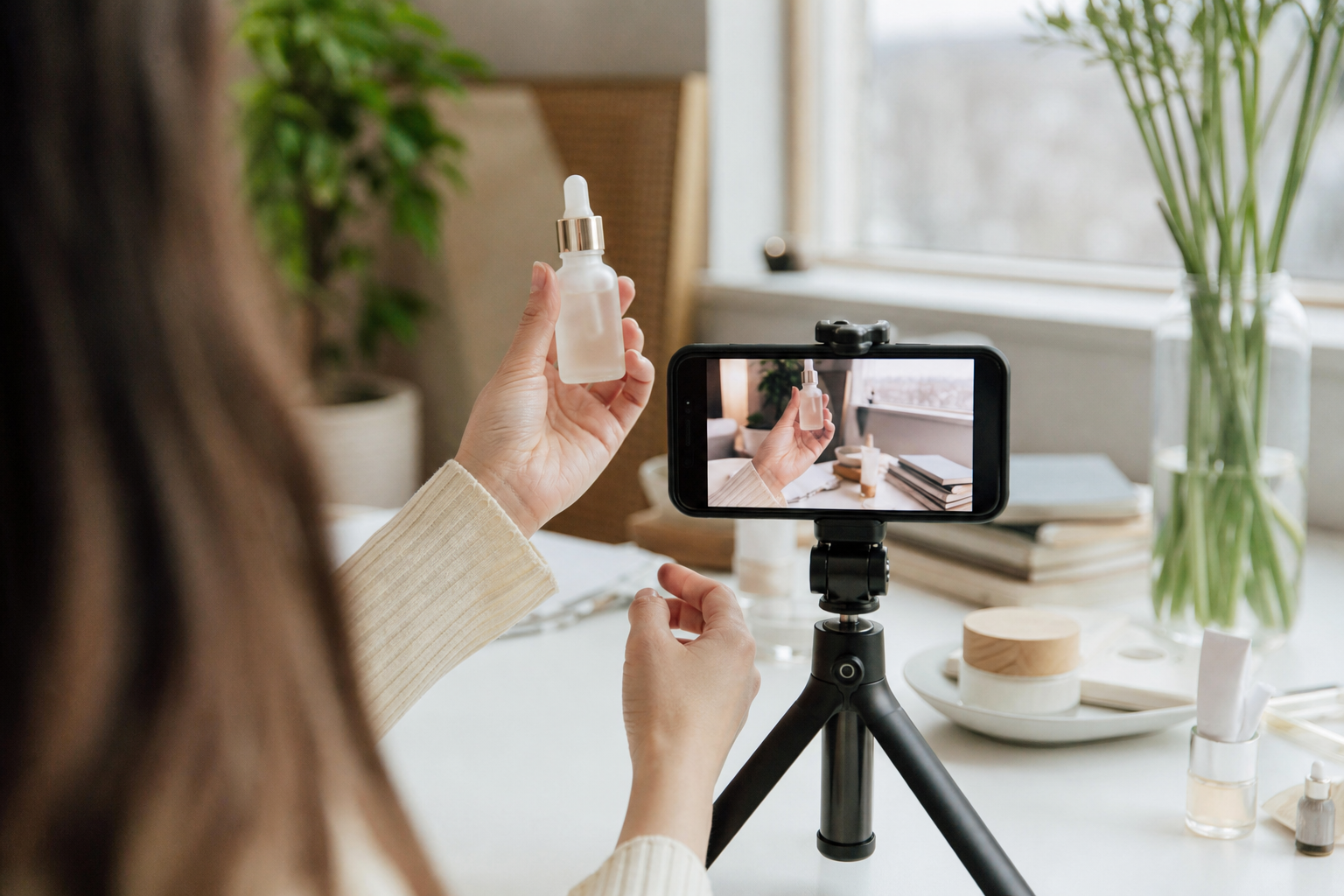
A proof post is a piece of content shot the way you would shoot a paid job. A product in your hand on a phone tripod, natural light, a hook, a real reason someone would keep watching. It does not need a paying client behind it. Buy a product you like, or use something you already own, and make the ad you would want to be paid to make.
The difference between a post that reads as a $150 video and one that reads as a $500 video usually comes down to the script. I broke that gap down in storytelling versus story-selling. When your public content shows story-selling, brands see the ceiling of what you can do before they ever email you.
You do not need a client roster to prove skill. You need reps. Every proof post is a rep, and every rep sits on your profile as evidence for the next brand who scrolls by.
Where to run the SEP method
The platform matters less than the consistency, but the mechanics differ. TikTok rewards volume and lets a total stranger see your content, which is why it is the fastest place to get seen when you are new. If that is your lane, the platform-specific steps are in my guide on becoming a UGC creator on TikTok.
Instagram works differently. Reach is tighter and the profile itself does more of the selling, so your bio, your about section, and the top row of your feed carry weight. If a brand lands on your Instagram, everything they need to know should be there. The full breakdown is in becoming a UGC creator on Instagram without a big following.
Reddit and marketplaces are worth a look too. Brands complain openly in creator subreddits about not being able to find people, which tells you exactly where the demand is sitting unanswered. You do not have to pick one platform. You have to pick the ones you will actually post on and then post on them relentlessly.
Whatever you run, keep one account per platform and keep the handle consistent so brands do not lose you. If you are still deciding whether any of this is real income, I answered the skeptic’s version of that question in whether being a UGC creator is actually legit.
Turning inbound into money
Posting fills the top of your funnel. It does not close deals by itself. When a brand does reach out, you need a rate, a delivery process, and a place to log the conversation. One of the most common questions I get is how to track inbound deals, and the answer is simple: a tracker, every lead in it, updated every time something moves.
Have your rates ready before the first inbound lands. Fumbling on price loses deals that posting worked hard to create. I laid out the full structure in UGC pricing ladders from $150 to $2,000 a video, and the way to turn a single client into recurring income in the retainer system.
The point of SEP is that it feeds both channels. Posting warms your pitches and generates inbound at the same time. A brand that saw your content, understood your niche, and watched you prove you can create is a brand halfway to yes before you say a word.
Free masterclass
Learn the exact steps to get paid by brands as a UGC creator.
Walk through the same posting and pitching system I use, plus how to price and land your first deals in the first week.
- Start posting – build your proof library from day one
- Set your rates – so no inbound catches you flat
Affiliate link: if you sign up through it I may earn a commission, at no cost to you.
The creators winning at this are not the ones with the best gear or the biggest following. They are the ones whose content is everywhere, whose niche is obvious, and who kept posting long after everyone else quit. Consistency compounds. Show up so often people get sick of seeing you, make your niche impossible to miss, and prove on camera that you can create. Do that as a ugc creator for beginners and the inbound stops being luck. It becomes math.
Frequently asked questions
Do I need followers before brands will hire me?
No. Brands hire UGC creators because you are a regular user of the product, not because you have reach. What matters is that your content is good and your niche is clear. A creator with zero following and a strong proof library beats one with followers and no evidence they can create.
How often should I post to get noticed?
Post at a cadence you can hold for six months without stopping. At the start, aim high enough that people almost get tired of seeing you. Consistency compounds, so the exact number matters less than never quitting. More content on the platforms means more chances a brand finds you.
Does my content have to be UGC-style for brands to hire me?
No. Brands often pick creators off personal content that shows personality and niche, with no UGC ad in sight. Mix both: posts that show who you are and posts that prove you can shoot like an ad. The personality gets attention; the proof posts close the trust gap.
Can I do this while working a corporate job?
Yes. Everybody has a side hustle at every level, and your company does not own your off hours. I ran UGC for months before anyone found out, and when my boss saw my ads she just said that is cool. The paranoia costs more deals than it protects.
Heads up: this article links to a free masterclass through an affiliate link. If you sign up through it I may earn a commission, at no cost to you. I only link things I actually use.